For PR pros who keep up with industry news, it isn't rare to see lists compiled by journalists highlighting things they hate about dealing with PR folks.
Some of these journalists make excellent points. As in everything in life, there are practitioners who are marvelous at their jobs and others who just aren't.
However, it goes both ways. Maybe it’s time to turn the tables and let journalists know 10 things they do that PR professionals don't like. Fair is fair.
After more than 25 years in communications I have pretty much seen and heard it all in the media relations field. I even wrote a book titled “Confessions of a Corporate Sycophant." I began my career as a newspaper journalist and then shifted over to "the dark side” of PR/communications a few years later. I've seen both sides. With that in mind, here are a few things PR folks hate when dealing with journalists:
1. Don’t call me 15 minutes before your deadline and demand to speak to the CEO about a story you likely have been working on for weeks. It can be a real challenge to pull the CEO out of a meeting with shareholders to meet your needs.
2. When an interview is scheduled for 10 a.m. with a top company officer, please show up on time. When you saunter in 30 minutes late, it makes me look stupid and also says to the person doing the interview that you do not value his or her time.
3. No one expects a journalist to look like a fashion model, but when you show up in a tank top, cut-off blue jeans and sandals, it sends a weird signal.
4. Take a few minutes to read the stuff I sent you as background information about our company. When your first five questions are about the information I sent you, it is kind of embarrassing.
5. Make sure your recorder is working before you do the interview. Calling me a day later in a panic because your recorder didn’t work really puts me in an awkward position, and makes you look like Bozo the Clown.
6. Don’t get all huffy when I tell you we cannot comment on some issues. In all honesty, we cannot discuss things for a variety of reasons: personnel, health, financial, proprietary, legal, etc.
7. When I offer to pay for your lunch, don’t act like it was some sort of bribe and an affront to your journalistic ethics. If you can be purchased for a lunch, it is you who has an ethics problem.
8. Believe it or not, you make mistakes in stories. Don’t get mad at me for pointing them out. It is likely my bosses are furious and I am trying to calm the situation.
9. Yes, journalism today does not lend itself to long-term employment. However, asking me about any potential openings at our company prior to an interview makes me feel really uncomfortable.
10. Do not allow someone at my company to review your story before it runs/airs. I have briefed interviewees ahead of time that real journalists don’t allow that practice. When you do, it makes me look stupid.
What pet peeves would you add to this list?
Aprio is a financial communications company offering a comprehensive range of services delivered by a team of highly-skilled communications professionals. We have well-established relationships in the investment community and financial media. Over the years Aprio has become a leading independent and wholly-owned South African, strategic communications company’s operating across a range of sectors, including financial services, mining, retail and manufacturing, among others.
Wednesday, 15 April 2015

Thursday, 19 March 2015
Employee Engagement Ideas: How To Get Your Staff To Stop Job Hunting
This post was featured in Forbes.com.

Studies show that engaged employees generate an average of between a quarter to a third moreprofits for their companies. Fantastic, right? But here’s the question: do you think that most of your employees are engaged?
If you answered yes, chances are you’re dead wrong. According to one eye-opening study, fewer than a third of all employees can be classified as actively engaged at work. Put another way, some industry statistics show that 66% of employees are disengaged and 60% are actively looking for work.
This rampant disengagement or semi-engagement hits where it hurts – your bottom line. As HR.com writerDavid Bator put it, since you pay a disengaged employee 100% of their salary for 50% effort, if we assume that the average salary of an employee in a 500 person organization is $50,000, then the annual cost of disengagement for that company is over $8M, or $34,200 per day.
Yikes.
So what can companies do to reverse this trend? How do you keep your employees engaged in their work day after day, month after month, year after year?
Sure, positive employee recognition is a great way to make people feel empowered, and by extension more engaged. But a party or a gift basket will only deliver a temporary jolt of enthusiasm and won’t do much at all for the greater dynamic of your organization.
Let’s talk about some longer term strategies and tactics that will.
The driving goal here is that each and every member of your company has a great answer to the question, “Why do you work here?” And the answer shouldn’t be “the pay” or “the half-day summer Fridays.” Salary and benefits alone do not lead to employee engagement.
What does? Well, it has to be something that feels like it originates from within each individual employee… something that empowers them. Something that makes them say “Listen to what my coworkers and I did the other day…”
Now, I hear what you’re saying: “But Ryan, we did the ropes course with the whole design team last year! Eight out of ten “trust falls” went great, too!” (OK, I know no one said anything like that. Surely it was a 90% success rate with the trust falls.) And the answer is no; the usual seasonal-engagement crutch of holiday parties in the winter and cookouts in the summer simply doesn’t work as the sole “cohesion creator.”
Instead, to keep your employees enthused and engaged, you need to have programs that your employees feel that they are a part of every day. And these initiatives must make employees feel like they are contributing to the company, yes, but also, in the most successful instances, like they are a part of something even bigger.
So think big.
And what’s bigger than, say, the earth itself? What? Well, yeah. Jupiter. And yes the Kuiper Belt is really huge, OK! You know what I mean. What I’m talking about is establishing a green recycling program that will make your employees aware that when they participate, not only are they doing good for the company, but for the planet as a whole. A recycling program is something that each and every member of an organization can participate in each and every day and it’s a fine starting point for much bigger things.
Taking things a step further, how about establishing a comprehensive corporate volunteer program, the strongest cure for employee disengagement? Few things engender a deeper sense of camaraderie than doing charitable work side by side with others. And the spirit established on an oil-slicked beach or in raising a house for a family fallen on hard times will not fade in the company lobby on Monday morning. Rather, it will pervade every aspect of every board room and cubicle.
The reason for this is simple: when people share in common cause, they grow closer together. The myriad moving parts of a larger company can often seem to function in seclusion, but by creating an exterior common cause, you can bring the varied parts – the employees from different divisions, teams, etc. – together to work in concert. The same is true for companies of all sizes, of course, but the larger the organization, the harder it can be to keep numerous employees engaged.
So you need some employee engagement strategies, then, don’t you? Well, then, let’s talk about a few:
1. Be a company people like to work for
Sounds simple enough, right? But I don’t mean that you have to be Google or some place that can afford Olde Time Pop Corn machines and Nerf arsenals in every kitchen (or even the kind of place that would want that stuff). Instead, just be the kind of place that is satisfying to work for but also provides so much more than opportunities for “work work.” That means opportunities for charitable giving, volunteering, community serviceactivities and the like.
2. Provide opportunities for employee involvement
Involvement and engagement aren’t quite synonyms, but they’re really close friends. And by involvement opportunities, we aren’t talking about overtime. We’re talking about facilitating giving and volunteering efforts that help employees feel connected to their communities and, by extension, your company. People like doing good things. In fact, they love it, it’s just often hard to know where and when one can do the most good. If the place they already work becomes the conduit for doing good work, you’re going to have happier, more engaged, and more productive workers on your team.
3. Listen up
Maybe you think things are going smoothly and your staff seems happy enough. But if you don’t allow your employees any autonomy in where their giving and volunteering efforts are aimed, they may end up feeling “voluntold.” Give your employees the gift of supporting their support for the charities and causes they care about most.
4. Bring employees together
Conversely, while you should allow for some cause autonomy, you also want to create opportunities for common cause. Organizing days of service, leading team volunteering events and turning fundraising ideasinto reality are the key to uniting employees on a much deeper level than could ever be achieved in the workplace alone.
5. Be persistent
Your work is not done after one successful weekend spent coordinating a company-wide riverbank cleaning session. Nor is it done after a months-long partnership with Habitat for Humanity. The fact is that your work toward furthering employee engagement is never done. And that should be exciting, not daunting. Indeed, charitable work never goes out of style, and it’s the best way to inspire engagement. So try it out. Frequently.
The occasional cookout or margarita never hurts, but if you want to demonstrate staff appreciation, provide opportunities for staff satisfaction by giving your employees cause to help causes.
Tuesday, 3 March 2015
TOP TIPS: The 10-point guide to effective employee communication during a company crisis -
1. Plan ahead and be prepared A successful response to a business crisis typically demands making and effectively communicating far-reaching and emotionally difficult decisions while under pressure and perhaps lacking complete or fully accurate information. Proper crisis preparedness planning therefore inevitably calls for putting the necessary organizational structure, processes and tools in place before a crisis hits.
Develop, implement and continuously improve a crisis communication strategy and matching crisis communication plan tailored to the company’s needs. Assign responsibilities and thoroughly train the designated employees and their back-ups. Put communicators on the corporate and, if applicable, the regional and local crisis management teams. Conduct vulnerability audits and use the findings to build realistic crisis scenarios upon which recurring media training and crisis management drills are based. Remember that effective employee communication is a crucial component of any comprehensive crisis management strategy and indispensable to minimizing crisis-related damage, seizing the opportunities a crisis may present and converting resulting organizational change into competitive advantages.
2. Maintain ongoing dialogue You have a much greater chance of achieving your communication objectives if there’s already an ongoing and constructive dialogue with your stakeholders long before a crisis occurs. Unfortunately, many companies fail in this and also lack an issues management program and a risk-communication strategy. In-depth stakeholder analysis is a prerequisite for compelling and targeted stakeholder communication. Use automated Internet and intranet monitoring to identify and better understand stakeholder needs and customize your external and internal crisis communication accordingly. If employees are used to regular communication through certain channels, use them in times of crisis along with communication tools that were developed for specific crisis situations.
3. Talk to employees first Whenever possible, internal crisis communication should precede external crisis communication. It’s vital employees don’t hear negative crisis-related news from outside sources first, as it may alienate them and hinder the successful crisis response and recovery. Engaging in an honest dialogue with as many employees as possible also fosters better understanding and employee support for possibly unpopular yet necessary steps company leadership may have to take to manage the crisis and secure the future of the business. Whichever method of internal crisis communication a company may choose, the more upfront management is about what is happening, the better-informed and more entrusted employees feel. Those employees who are communicated with in an open, timely and truthful way are not only able, but also often willing to represent their company and support its goals internally as well as externally. This is especially true in a crisis.
4. Eradicate uncertainty Underestimate the importance of effective employee communication during a crisis and you may suffer significant economic damage due to, among other factors, a lack of trust, low morale and the subsequent loss of trained and dedicated employees. In a crisis situation, it’s necessary to increase the internal communication frequency since employees have a high demand for updated information as well as the desire to provide continuous feedback. Ask these questions before communicating with employees during a crisis and as part of the post-crisis evaluation and ongoing crisis preparedness planning: What is the desired outcome of the communication? What will be communicated? Who will initiate the communication? Which groups of employees will be communicated with? How and / or where is the communication going to happen? When will the communication take place? Ask these questions after communicating with employees during a crisis and as part of the post-crisis evaluation and ongoing crisis preparedness planning: Was the communication objective met? How can we do better?
5. Tackle employees’ questions Employees’ questions and concerns should be anticipated, identified and responded to on an ongoing basis. Because employees’ trust in management’s ability to handle the crisis is crucial, even those questions and concerns that seem unimportant or inconvenient should be addressed. Especially in cases where the company may be responsible for any harm to employees and their loved ones, consider communicating regret and empathy as well as a clear explanation of the steps the company is taking to deal with the situation and to prevent recurrences. However, don’t base the messages on the views of management alone. Be sure to take into account the perceptions, opinions and expectations within the different stakeholder groups. Also bear in mind any legal and other restrictions on the dissemination of certain information relating to the crisis.
6. Create communication allies Don’t forget that employees have a vested interest in working with management to prevail over the crisis – many are eager to put in extra time and effort to turn the ship around. Guide employees in their effort to speak up for the company. Empowering employees to take charge in times of crisis creates valuable communication allies who reinforce messages internally and also carry them into the community. Remember that despite the wealth of technology at the disposal of today’s communicator, face-to-face communication between supervisors and their direct reports remains one of the most effective tools.
7. Be consistent in messaging With the goal of coherent messages and simultaneous communication in mind, many companies implement a one-voice-policy: It means only appropriately trained and designated employees, who are electronically linked with senior management and one another, may act as company spokespersons. The one-voice-policy may be difficult to uphold in times of crisis because employees have a natural tendency to talk about stressful work-related events with family and friends, perhaps criticizing management’s handling of the situation. A disgruntled employee talking to the media may, however, pose a much more serious risk. Not only would this behavior sabotage the company’s one-voice-policy, but it may also threaten the entire crisis response.
8. Convince leaders on feedback Employees appreciate and increasingly demand feedback options such as face-to-face meetings and two-way intranet-based communication. But the best-laid crisis communication strategy may not work if feedback is not included in management’s decision-making. Use the following three arguments if you need to convince senior managers of the value of employee feedback: Employee feedback allows you to track whether messages have reached the intended groups of employees and achieved the desired results. It enables you not only to track employees’ opinions, perceptions and expectations, but also may reveal what colleagues and external stakeholders are saying to employees. Employee feedback often contains valuable information and suggestions for minimizing damage, seizing opportunities and preventing future crises.
9. Involve senior management Business crises can cause immense pressure and uneasiness for employees. To prevent rumors, false information and panic, senior management must be involved in providing distressed employees and managers with relevant information, guidance and motivation. Aside from communicating with employees through traditional channels, intranet-based crisis blogs are becoming increasingly popular. Executive or CEO blogs are an excellent listening tool that allows senior managers instant two-way communication with employees around the globe. They can aslo easily be updated during a crisis and create an intranet-based record of opinions and facts that helps to control rumors and speculation.
10. Consider external help No matter how much emphasis a company places on crisis prevention, it will never be completely safe because crises are part of the organizational lifecycle. The key to business survival therefore lies in maximizing the company’s crisis preparedness. If you don’t have the necessary theoretical knowledge or crisis communication experience, consider retaining qualified external consultants. They can assist in boosting the company’s crisis readiness as well as its ability to effectively respond to and quickly recover from business crises. -
See more at: https://www.melcrum.com/research/engage-employees-strategy-and-change/top-tips-10-point-guide-effective-employee#sthash.rrWWWoSI.dpuf
Develop, implement and continuously improve a crisis communication strategy and matching crisis communication plan tailored to the company’s needs. Assign responsibilities and thoroughly train the designated employees and their back-ups. Put communicators on the corporate and, if applicable, the regional and local crisis management teams. Conduct vulnerability audits and use the findings to build realistic crisis scenarios upon which recurring media training and crisis management drills are based. Remember that effective employee communication is a crucial component of any comprehensive crisis management strategy and indispensable to minimizing crisis-related damage, seizing the opportunities a crisis may present and converting resulting organizational change into competitive advantages.
2. Maintain ongoing dialogue You have a much greater chance of achieving your communication objectives if there’s already an ongoing and constructive dialogue with your stakeholders long before a crisis occurs. Unfortunately, many companies fail in this and also lack an issues management program and a risk-communication strategy. In-depth stakeholder analysis is a prerequisite for compelling and targeted stakeholder communication. Use automated Internet and intranet monitoring to identify and better understand stakeholder needs and customize your external and internal crisis communication accordingly. If employees are used to regular communication through certain channels, use them in times of crisis along with communication tools that were developed for specific crisis situations.
3. Talk to employees first Whenever possible, internal crisis communication should precede external crisis communication. It’s vital employees don’t hear negative crisis-related news from outside sources first, as it may alienate them and hinder the successful crisis response and recovery. Engaging in an honest dialogue with as many employees as possible also fosters better understanding and employee support for possibly unpopular yet necessary steps company leadership may have to take to manage the crisis and secure the future of the business. Whichever method of internal crisis communication a company may choose, the more upfront management is about what is happening, the better-informed and more entrusted employees feel. Those employees who are communicated with in an open, timely and truthful way are not only able, but also often willing to represent their company and support its goals internally as well as externally. This is especially true in a crisis.
4. Eradicate uncertainty Underestimate the importance of effective employee communication during a crisis and you may suffer significant economic damage due to, among other factors, a lack of trust, low morale and the subsequent loss of trained and dedicated employees. In a crisis situation, it’s necessary to increase the internal communication frequency since employees have a high demand for updated information as well as the desire to provide continuous feedback. Ask these questions before communicating with employees during a crisis and as part of the post-crisis evaluation and ongoing crisis preparedness planning: What is the desired outcome of the communication? What will be communicated? Who will initiate the communication? Which groups of employees will be communicated with? How and / or where is the communication going to happen? When will the communication take place? Ask these questions after communicating with employees during a crisis and as part of the post-crisis evaluation and ongoing crisis preparedness planning: Was the communication objective met? How can we do better?
5. Tackle employees’ questions Employees’ questions and concerns should be anticipated, identified and responded to on an ongoing basis. Because employees’ trust in management’s ability to handle the crisis is crucial, even those questions and concerns that seem unimportant or inconvenient should be addressed. Especially in cases where the company may be responsible for any harm to employees and their loved ones, consider communicating regret and empathy as well as a clear explanation of the steps the company is taking to deal with the situation and to prevent recurrences. However, don’t base the messages on the views of management alone. Be sure to take into account the perceptions, opinions and expectations within the different stakeholder groups. Also bear in mind any legal and other restrictions on the dissemination of certain information relating to the crisis.
6. Create communication allies Don’t forget that employees have a vested interest in working with management to prevail over the crisis – many are eager to put in extra time and effort to turn the ship around. Guide employees in their effort to speak up for the company. Empowering employees to take charge in times of crisis creates valuable communication allies who reinforce messages internally and also carry them into the community. Remember that despite the wealth of technology at the disposal of today’s communicator, face-to-face communication between supervisors and their direct reports remains one of the most effective tools.
7. Be consistent in messaging With the goal of coherent messages and simultaneous communication in mind, many companies implement a one-voice-policy: It means only appropriately trained and designated employees, who are electronically linked with senior management and one another, may act as company spokespersons. The one-voice-policy may be difficult to uphold in times of crisis because employees have a natural tendency to talk about stressful work-related events with family and friends, perhaps criticizing management’s handling of the situation. A disgruntled employee talking to the media may, however, pose a much more serious risk. Not only would this behavior sabotage the company’s one-voice-policy, but it may also threaten the entire crisis response.
8. Convince leaders on feedback Employees appreciate and increasingly demand feedback options such as face-to-face meetings and two-way intranet-based communication. But the best-laid crisis communication strategy may not work if feedback is not included in management’s decision-making. Use the following three arguments if you need to convince senior managers of the value of employee feedback: Employee feedback allows you to track whether messages have reached the intended groups of employees and achieved the desired results. It enables you not only to track employees’ opinions, perceptions and expectations, but also may reveal what colleagues and external stakeholders are saying to employees. Employee feedback often contains valuable information and suggestions for minimizing damage, seizing opportunities and preventing future crises.
9. Involve senior management Business crises can cause immense pressure and uneasiness for employees. To prevent rumors, false information and panic, senior management must be involved in providing distressed employees and managers with relevant information, guidance and motivation. Aside from communicating with employees through traditional channels, intranet-based crisis blogs are becoming increasingly popular. Executive or CEO blogs are an excellent listening tool that allows senior managers instant two-way communication with employees around the globe. They can aslo easily be updated during a crisis and create an intranet-based record of opinions and facts that helps to control rumors and speculation.
10. Consider external help No matter how much emphasis a company places on crisis prevention, it will never be completely safe because crises are part of the organizational lifecycle. The key to business survival therefore lies in maximizing the company’s crisis preparedness. If you don’t have the necessary theoretical knowledge or crisis communication experience, consider retaining qualified external consultants. They can assist in boosting the company’s crisis readiness as well as its ability to effectively respond to and quickly recover from business crises. -
See more at: https://www.melcrum.com/research/engage-employees-strategy-and-change/top-tips-10-point-guide-effective-employee#sthash.rrWWWoSI.dpuf
Thursday, 19 February 2015
7 Lies Employers Use To Trick You Into Working For Them
I got this letter from a LinkedIn reader:
Why Some Employers Have Rose-Colored Recruiting Glasses
While some employers are starting to properly reveal their Employment Brands, it could take a while for others to recognize the need to accurately convey what it's like to work for their company - and that will hurt their ability to hire effectively.
For example...
Companies that pull the bait-n-switch (like what the poor professional experienced above), are usually desperate to improve their troubled company - and assume hiring new talent will fix their problem. They make promises to themselves, "If we can just get the best talent in here and turn things around, we can actually make good on all these promises we're making while recruiting them." In their minds, hiring you will give them the results they need to make those promises a reality. Unfortunately, hiring alone can't fix a failing company or a broken corporate culture. Before you know it, the company is making excuses why they won't deliver on those promises - and may even try to make you feel bad for asking. As if it was your fault!? Sound familiar?
7 Potential Lies Told In The Hiring Process
Any time a company makes the following claims, you should push back and try to get more information before assuming it's the truth. While some can deliver, others can't - and it's up to you to figure out which ones are sincere. The potential lies are:
Use "Reverse Behavioral Interviewing" To Reveal Employer's True Self
Behavioral interviewing is a technique recruiters use to help determine the personality, aptitude, and true experience level of a candidate. They're historically open-ended questions designed to force candidates to provide more detailed answers to questions that address things like their:
They're also trying to identify and eliminate any liars, under-performers, or high-maintenance candidates. Hiring is expensive. Behavioral interviewing is meant to help minimize bad hires.
What If You Could Do The Same?
You can!
When your turn comes to ask questions in the interview (usually, at the end of the conversation), you can prepare a list of open-ended behavioral questions that will force the employer to articulate more clearly how they deliver on the promises they're making. For example, check these seven questions as they relate to the potential lies above:
Difference Between Working "For" An Employer & Working "With" Them
Learning how to reverse behavioral interview a potential employer is a very important step in becoming a more sophisticated and successful job seeker. When you realize you want to work "with" employers and not "for" them, you can begin to approach the job search with your eyes wide open. You deserve the best opportunities, and that means improving your interview skills so you can spot the less-than-ideal employers. Use the technique above to help you get better at finding the right fit for you!
J.T. O'Donnell
Dear J.T.,
Why do employers lie to get you to take the job? The last two companies I've worked for have done the same thing. They promise me things, but once I'm in the job, they don't deliver. I'm tired of getting taken advantage of and don't now how to make it stop. What am I doing wrong?This happens a lot. And frankly, it's going to get even worse as the talent shortage increases and companies play dirty to get candidates to take their jobs. Here's an article which explains this growing trend...
Why Some Employers Have Rose-Colored Recruiting Glasses
While some employers are starting to properly reveal their Employment Brands, it could take a while for others to recognize the need to accurately convey what it's like to work for their company - and that will hurt their ability to hire effectively.
For example...
Companies that pull the bait-n-switch (like what the poor professional experienced above), are usually desperate to improve their troubled company - and assume hiring new talent will fix their problem. They make promises to themselves, "If we can just get the best talent in here and turn things around, we can actually make good on all these promises we're making while recruiting them." In their minds, hiring you will give them the results they need to make those promises a reality. Unfortunately, hiring alone can't fix a failing company or a broken corporate culture. Before you know it, the company is making excuses why they won't deliver on those promises - and may even try to make you feel bad for asking. As if it was your fault!? Sound familiar?
7 Potential Lies Told In The Hiring Process
Any time a company makes the following claims, you should push back and try to get more information before assuming it's the truth. While some can deliver, others can't - and it's up to you to figure out which ones are sincere. The potential lies are:
- There's a lot of opportunity for advancement.
- The bonus structure will double your income.
- Your territory is protected and we won't change it.
- You'll get extensive training.
- You'll have scheduling flexibility and can work from home on occasion.
- We'll hire you some help when it gets busy.
- Once you fix this problem/department/project, etc., you'll get to work on something new and exciting.
Use "Reverse Behavioral Interviewing" To Reveal Employer's True Self
Behavioral interviewing is a technique recruiters use to help determine the personality, aptitude, and true experience level of a candidate. They're historically open-ended questions designed to force candidates to provide more detailed answers to questions that address things like their:
- ability to work in teams
- work style
- track record of success
- ability to overcome adversity
- capacity to cope with change
They're also trying to identify and eliminate any liars, under-performers, or high-maintenance candidates. Hiring is expensive. Behavioral interviewing is meant to help minimize bad hires.
What If You Could Do The Same?
You can!
When your turn comes to ask questions in the interview (usually, at the end of the conversation), you can prepare a list of open-ended behavioral questions that will force the employer to articulate more clearly how they deliver on the promises they're making. For example, check these seven questions as they relate to the potential lies above:
- Can you give me an example of someone who was hired in the last two years to a similar role who has already advanced in their career here? In particular, can you explain what they did to make that happen?
- Can I meet someone in the company who has doubled their income with the bonus structure? I'd like to learn more about how they accomplished that.
- I know territories can change as the business changes, what do you put into place to ensure this never happens? Is there a written legal contract of some sort?
- Can you break down the formal training versus the informal training I will receive? And, may I speak to someone who has been in this role a year to see how they best used the training to their advantage?
- What is the procedure for requesting to work from home? Can I speak to someone who uses this scheduling flexibility so I can learn what he/she is doing to make sure she is meeting the company's goals when working remotely?
- Can you share with me a recent example of someone who was hired on to help due to growth. What is the company's process for identifying and funding additional headcount?
- Can you share with me a recent example of someone who was hired on to fix a problem and has now gone on to a new project? What did they do to ensure they were given the opportunity to move on?
Difference Between Working "For" An Employer & Working "With" Them
Learning how to reverse behavioral interview a potential employer is a very important step in becoming a more sophisticated and successful job seeker. When you realize you want to work "with" employers and not "for" them, you can begin to approach the job search with your eyes wide open. You deserve the best opportunities, and that means improving your interview skills so you can spot the less-than-ideal employers. Use the technique above to help you get better at finding the right fit for you!
J.T. O'Donnell
Thursday, 27 March 2014
6 Ways To Help Your PR Company Get You Results
The Public Relations Society of America defines PR as “a strategic communication process that builds mutually beneficial relationships between organizations and their publics.” In other words, PR is marketing that builds credibility.
There are a lot of ways to get free PR for your startup, but publicists have spent years building up media contacts and pitching skills that you cannot replicate on your own. For Startups, especially ones trying to raise money, the value of good PR cannot be underestimated. Even if your budget is tight, hiring a good firm (for at least six months) can be the difference between barely scraping by and hitting it big.
But PR is a bit like cooking – even the best chef can only do so much with bad ingredients. If you want your PR firm to succeed, you need to help them.
Paula Conway is president of Astonish Media Group, a PR firm based in New York City. Astonish works with big companies (e.g. American Airlines) and startups (e.g. FITWEEK) alike, and has gotten impressive PR results for both. Here are her top tips for helping you get the results you are paying for.
1. Share News Early
Tell your PR firm of any branding changes, news, partnerships, or announcements ahead of time. Don’t just spring news on them a week or two before something is about to happen and then expect them to get you in the New York Times. Lead-time is critical with media, so give your firm the time they need to craft the messaging and broadcast that messaging. Remember that print publications often work six months out.
2. Consult With Your Firm On Branding Decisions
Get your firm’s input on any major changes to the company’s name, branding or market positioning. “We had a client who decided after we had landed him quite a bit of press to up and change the name of his company, and introduce the new brand. It confused the media and ultimately, because they became suspicious of the sudden branding shift, he lost some high profile press opportunities.”
3. Make Time To Talk
Make your team members available for regular check ins and for media inquiries. If the CEO is going to be the spokesperson, he or she needs to be available to the media within a reasonable timeframe (24-48 hours). If the CEO is just too busy, find someone within the company who will make a great spokesperson who has the time to cultivate the media relationships. These relationships are critical to your company’s future and brand trust with the press. PR is not something you can just hand off. It takes work and time to be successful.
 4. Be Patient
Don’t put unreasonable demands on your PR firm. Expecting them to pick up the phone and have you in the Wall Street Journal within a week because you have a great story is not reasonable. Even if your PR firm as the best contacts, they need to reach out to their contacts with a measured approach to ensure that the message is well communicated and that your brand is presented in the best possible light. You also need to allow time for your company to gain trust with the media and this simply does not happen overnight. Paula recommends you contract a firm for a minimum of six months, and ideally a year, to start seeing results.
5. Listen.
Take your PR firm’s counsel. Remember, good press is IRREPLACEABLE and is the most valuable objective advertising your company or brand can ever receive. The good will it will buy you will live on beyond the moment of sales and pay you back in many different ways. Trust your firm to know when it is the right or wrong time to strike out with a message or new product launch.
6. Be Creative.
Give your firm good stories. If your company is doing interesting things, share that with your PR firm. Have more conference calls, or invite them in to meet with your staff and learn more about the creative things your company has to offer. Good stories and interesting angles are what get an editor’s attention. You cannot pitch the same thing over and over again, your PR firm needs you to help them think outside the box to help get you more placements.
As Theresa Roemer (an expert in business philanthropy who is one of Astonish’s clients) summarized, “Having been through multiple PR firms and having made many mistakes along the way, I learned that you, the client, are as much responsible for the PR as the publicist. You need to communicate your goals, share information, and make yourself and your team members available. Otherwise, you’re spending money in a vacuum. If you do not work alongside your PR firm and lay out your objectives and expectations, you cannot expect them to be met.”
There are a lot of ways to get free PR for your startup, but publicists have spent years building up media contacts and pitching skills that you cannot replicate on your own. For Startups, especially ones trying to raise money, the value of good PR cannot be underestimated. Even if your budget is tight, hiring a good firm (for at least six months) can be the difference between barely scraping by and hitting it big.
But PR is a bit like cooking – even the best chef can only do so much with bad ingredients. If you want your PR firm to succeed, you need to help them.
Paula Conway is president of Astonish Media Group, a PR firm based in New York City. Astonish works with big companies (e.g. American Airlines) and startups (e.g. FITWEEK) alike, and has gotten impressive PR results for both. Here are her top tips for helping you get the results you are paying for.
1. Share News Early
Tell your PR firm of any branding changes, news, partnerships, or announcements ahead of time. Don’t just spring news on them a week or two before something is about to happen and then expect them to get you in the New York Times. Lead-time is critical with media, so give your firm the time they need to craft the messaging and broadcast that messaging. Remember that print publications often work six months out.
2. Consult With Your Firm On Branding Decisions
Get your firm’s input on any major changes to the company’s name, branding or market positioning. “We had a client who decided after we had landed him quite a bit of press to up and change the name of his company, and introduce the new brand. It confused the media and ultimately, because they became suspicious of the sudden branding shift, he lost some high profile press opportunities.”
3. Make Time To Talk
Make your team members available for regular check ins and for media inquiries. If the CEO is going to be the spokesperson, he or she needs to be available to the media within a reasonable timeframe (24-48 hours). If the CEO is just too busy, find someone within the company who will make a great spokesperson who has the time to cultivate the media relationships. These relationships are critical to your company’s future and brand trust with the press. PR is not something you can just hand off. It takes work and time to be successful.
Paula Conway, President of Astonish Media
Don’t put unreasonable demands on your PR firm. Expecting them to pick up the phone and have you in the Wall Street Journal within a week because you have a great story is not reasonable. Even if your PR firm as the best contacts, they need to reach out to their contacts with a measured approach to ensure that the message is well communicated and that your brand is presented in the best possible light. You also need to allow time for your company to gain trust with the media and this simply does not happen overnight. Paula recommends you contract a firm for a minimum of six months, and ideally a year, to start seeing results.
5. Listen.
Take your PR firm’s counsel. Remember, good press is IRREPLACEABLE and is the most valuable objective advertising your company or brand can ever receive. The good will it will buy you will live on beyond the moment of sales and pay you back in many different ways. Trust your firm to know when it is the right or wrong time to strike out with a message or new product launch.
6. Be Creative.
Give your firm good stories. If your company is doing interesting things, share that with your PR firm. Have more conference calls, or invite them in to meet with your staff and learn more about the creative things your company has to offer. Good stories and interesting angles are what get an editor’s attention. You cannot pitch the same thing over and over again, your PR firm needs you to help them think outside the box to help get you more placements.
As Theresa Roemer (an expert in business philanthropy who is one of Astonish’s clients) summarized, “Having been through multiple PR firms and having made many mistakes along the way, I learned that you, the client, are as much responsible for the PR as the publicist. You need to communicate your goals, share information, and make yourself and your team members available. Otherwise, you’re spending money in a vacuum. If you do not work alongside your PR firm and lay out your objectives and expectations, you cannot expect them to be met.”
Wednesday, 22 January 2014
5 DIY Public Relations Tips for Startups
 |
| Developing and executing a PR strategy as a startup takes time and effort, but the increased awareness and sales are worth it. Credit: Public relations image via Shutterstock |
Marketing is a crucial element for any startup's success. If people don't know about your product or service, how are they going to buy it? As obvious as this may sound, many entrepreneurs put their marketing and public relations efforts on the backburner because they can't afford professional services, and it simply becomes another item on a never-ending to-do list.
If you have this mindset about marketing and aren't making it a priority, you may be missing out on valuable leads. Developing and executing your own PR strategy as a startup does take time and effort, but the increased customer awareness — and consequently, sales — is well worth it.
Lisa Carole, co-founder of fashion retail company Hoodsie, took the "do-it-yourself" approach to publicizing her recently funded Kickstarter campaign. Though she had a lot to learn about writing releases, pitching reporters and designing media kits, she now feels confident that Hoodsie can manage its PR as it gets off the ground. [How to Write a Great Press Release]
"Being able to do your own PR is liberating in the sense that you don't need to rely on anyone," Carole told BusinessNewsDaily. "You are your business' best advocate."
Carole offered the following tips for startups that are handling their own public relations.
Make yourself relevant.Take the time to develop relationships with relevant media contacts. They're not there to serve you — a journalist's job is to report the news, so make yourself newsworthy. Carole found that for Hoodsie, targeted outreach from the founders was the best approach to reaching journalists. Rather than trying to force their story on the media, the team worked to find angles that would be relevant to the publications they were pitching.
What's your story? Spend some time thinking about what makes your company and product interesting. How can you tie these points of interest into a memorable and positive representation of your company, product and brand?
Make your own lists.There are lots of shortcuts to the list-building process, but Carole recommended taking the time to create a comprehensive list of publications that would suit your company's angle. From there, go through each publication's website by searching relevant terms to find the correct writer to contact.
Newswire services are worth it. If your budget allows for it, sign up for a press release distribution service to increase your media reach. Many sites have services tailored for small businesses that are writing and sending their own press releases.
"We used a newswire service halfway through our campaign that really boosted our web presence and got quite a bit of unsolicited coverage," Carole said. "Had we known this would be the result, we would have scheduled one for our initial launch."
Utilize the cloud. Use cloud storage services like Dropbox to host PDFs of your media kit, press releases and a few high-resolution images, and include the link to the files in your pitch emails. It's a great way to share your materials without having to add any large attachments.
Originally published on BusinessNewsDaily.
Monday, 13 January 2014
Content Marketing 101: An Introduction to the Newest Marketing Tool for Businesses
The traditional marketing methods that businesses have used in the past are becoming outdated and uninteresting to consumers, leading to low conversion rates, decreased website traffic and lower ROI (on a company's marketing spend). Today, many companies are choosing to implement new and creative marketing strategies with the end goal of establishing their company and key executives as experts in their industry. Not only does this increase a company's overall credibility, it also helps to shorten the sales cycle drastically. The most effective thought leadership campaigns use content marketing to educate readers (potential clients, media, industry experts, etc.) about a company's area of expertise.
So how can you get started with your content marketing strategy? First, it's important to know the basics...
What is Content Marketing?
Content marketing is a targeted marketing strategy that involves creating insightful, engaging and interesting written content with the aim of creating customer loyalty and increasing opportunities for future business. An effective content marketing strategy will help a business engage with its customers, leaving them better informed and interested to find out more.
Content marketing can include a variety of tactics including:
Content marketing is not a direct sales tactic, but rather a two-way communication medium between a business and its target audience. Like public relations and social media, content marketing is not directly designed to sell a product/service; however, it can have significant effect on brand awareness and can be highly effective at positioning a company as an expert in their field. As I'm sure you know, these activities cannot be directly linked to an increase in sales, but they can significantly decrease the length of the sales cycle, making it a highly effective marketing medium -- especially for start-ups and companies working in a highly competitive market with high supply. By improving the public's understanding of who a company is and the product/service it offers, content marketing is a fantastic way to increase a company's credibility and brand recognition without the significant costs associated with more traditional marketing methods.
In order to get the highest ROI from your content marketing strategy, it is very important to follow these four tips:
Embrace the Blog
Hosting a blog and sharing content on your website not only allows your customer to understand your position as a thought leader, but it is also the easiest and most effective method of driving traffic to your site and increasing your SEO ranking. Every time a new blog post is added to your blog, the search engines scan your site, which immediately leads to a boost in your search ranking.
Create a weekly blogging schedule and post on the same days every week, so your followers will know when to visit your blog to read your new posts. Businesses should be publishing a new blog post with original content at least twice a week. At least another two times per week, you should be sharing content from other sources (news articles, other companies, studies, stats, etc. with links back to the original source) through your blog. For even greater consistency and brand recognition, you should cross-promote your blog through your company's social media channels.
Promote Through Social Media
Social media is one of the best ways to post and share your content but because many companies are only now beginning to integrate it into their strategy, it can go a long way to establish your company as innovative. Before getting started, it is important to understand the role of social media and the benefit it offers for businesses: social media is one of the best marketing mediums for developing relationships with (and loyalty from) potential customers, but in most cases, it is not a direct sales tactic.
Implementing a social media posting schedule will help your business maintain its competitive edge, and ensure that you can offer interesting, unique content on a regular basis. The more views your post receives, the more it will be shared, commented on and enjoyed by both new and existing customers -- and the greater ROI that your social media outreach will earn. Because of this fact, scheduling your posts to ensure the greatest exposure to your followers can make or break the success of your social media strategy. Scheduling tools like Oktopost will enable businesses to share content at the time of day that it will make the biggest impact.
As well as publishing your own content on a consistent, ongoing basis, businesses should be engaging with customer's posts to ensure continued customer satisfaction. For example, if a hotel guest tweets a picture of the fantastic view of the beach from her hotel room, the hotel should acknowledge the post offering a friendly greeting or 'thank you' for the post. Consider also retweeting (sharing the image with your followers) and then recognizing the customer on #FF (follow Friday), as one of your property's amazing guests. This will make the guest feel special and she will remember the hotel for its fantastic beachside view, as well as its friendly staff.
Drop the Sales Pitch
Effective content marketing minimizes the need for a sales pitch. In fact, if a company does choose to promote their company within their content, its content marketing strategy will not be effective. Most consumers are highly distrustful of advertising messages and so the moment your content becomes promotional, readers are likely to lose interest. Customers visit websites and social media channels to learn insightful information about a business' area of expertise, not to experience a hard sell (or even a soft one!). Instead, provide customers with the information they are looking to find in a creative and informative way.
For example, a hotel can use content marketing to increase repeat site visits from potential customers, increasing brand recognition, brand loyalty and increasing direct bookings in the process. In order to do so, the hotel would need to make their website (and blog) a destination for consumers to find out valuable travel tips (including topics like: how to save on your upcoming hotel stay, etc.). Because readers keep coming back to the site to learn from your content, they will be more likely to remember your hotel and visit your direct website (instead of the OTAs) when they are booking their next hotel stay in that destination.
By providing info instead of just using your content to sell, you are giving the customer time to develop trust for your company, before receiving your sales messages. If your content continues to be engaging, informative and creative enough, the customer will remember your company and come back to make a purchase when they are ready to do so.
Add Videos
Videos are very popular content with followers because most people connect more strongly to visuals than copy; however, many companies are hesitant to use video content because of their perception of it as expensive and time-consuming to create. In reality, videos can be much easier to produce than you might think. With a well-planned script, a professional setting and proper lighting, you can use free video apps (i.e. Vine and Instagram) to create mini-looping videos that can be shared on all of your social media profiles quickly and easily.
Additionally, creating a longer video for your homepage or for YouTube will not only position your company as a creative thought leader, but can also offer very beneficial marketing exposure. For example, multimedia content often appears on the first page of Google search results, which helps to make your business more visible (without having to invest in expensive SEO or Google AdWords campaigns). Even if your videos are not visible on the first page of search results, consumers will often use YouTube to conduct a search. In fact, YouTube is the second most popular search engine in the world.
To conclude, as it becomes harder for companies to stand out from the crowd in a highly competitive market, a content marketing strategy becomes increasingly important. Content marketing is a low-cost, highly effective way for companies to establish a position of thought leadership and develop relationships with potential customers using top-notch content.
If you have any further questions about content marketing or if you would like help planning and creating your business' content marketing strategy, please don't hesitate to contact me at any time at jenn@jlnpr.com.
So how can you get started with your content marketing strategy? First, it's important to know the basics...
What is Content Marketing?
Content marketing is a targeted marketing strategy that involves creating insightful, engaging and interesting written content with the aim of creating customer loyalty and increasing opportunities for future business. An effective content marketing strategy will help a business engage with its customers, leaving them better informed and interested to find out more.
Content marketing can include a variety of tactics including:
- Thought leadership articles published in high-profile publications
- Blogging
- e-Books
- Webinars
- Among many others...
Content marketing is not a direct sales tactic, but rather a two-way communication medium between a business and its target audience. Like public relations and social media, content marketing is not directly designed to sell a product/service; however, it can have significant effect on brand awareness and can be highly effective at positioning a company as an expert in their field. As I'm sure you know, these activities cannot be directly linked to an increase in sales, but they can significantly decrease the length of the sales cycle, making it a highly effective marketing medium -- especially for start-ups and companies working in a highly competitive market with high supply. By improving the public's understanding of who a company is and the product/service it offers, content marketing is a fantastic way to increase a company's credibility and brand recognition without the significant costs associated with more traditional marketing methods.
In order to get the highest ROI from your content marketing strategy, it is very important to follow these four tips:
Embrace the Blog
Hosting a blog and sharing content on your website not only allows your customer to understand your position as a thought leader, but it is also the easiest and most effective method of driving traffic to your site and increasing your SEO ranking. Every time a new blog post is added to your blog, the search engines scan your site, which immediately leads to a boost in your search ranking.
Create a weekly blogging schedule and post on the same days every week, so your followers will know when to visit your blog to read your new posts. Businesses should be publishing a new blog post with original content at least twice a week. At least another two times per week, you should be sharing content from other sources (news articles, other companies, studies, stats, etc. with links back to the original source) through your blog. For even greater consistency and brand recognition, you should cross-promote your blog through your company's social media channels.
Promote Through Social Media
Social media is one of the best ways to post and share your content but because many companies are only now beginning to integrate it into their strategy, it can go a long way to establish your company as innovative. Before getting started, it is important to understand the role of social media and the benefit it offers for businesses: social media is one of the best marketing mediums for developing relationships with (and loyalty from) potential customers, but in most cases, it is not a direct sales tactic.
Implementing a social media posting schedule will help your business maintain its competitive edge, and ensure that you can offer interesting, unique content on a regular basis. The more views your post receives, the more it will be shared, commented on and enjoyed by both new and existing customers -- and the greater ROI that your social media outreach will earn. Because of this fact, scheduling your posts to ensure the greatest exposure to your followers can make or break the success of your social media strategy. Scheduling tools like Oktopost will enable businesses to share content at the time of day that it will make the biggest impact.
As well as publishing your own content on a consistent, ongoing basis, businesses should be engaging with customer's posts to ensure continued customer satisfaction. For example, if a hotel guest tweets a picture of the fantastic view of the beach from her hotel room, the hotel should acknowledge the post offering a friendly greeting or 'thank you' for the post. Consider also retweeting (sharing the image with your followers) and then recognizing the customer on #FF (follow Friday), as one of your property's amazing guests. This will make the guest feel special and she will remember the hotel for its fantastic beachside view, as well as its friendly staff.
Drop the Sales Pitch
Effective content marketing minimizes the need for a sales pitch. In fact, if a company does choose to promote their company within their content, its content marketing strategy will not be effective. Most consumers are highly distrustful of advertising messages and so the moment your content becomes promotional, readers are likely to lose interest. Customers visit websites and social media channels to learn insightful information about a business' area of expertise, not to experience a hard sell (or even a soft one!). Instead, provide customers with the information they are looking to find in a creative and informative way.
For example, a hotel can use content marketing to increase repeat site visits from potential customers, increasing brand recognition, brand loyalty and increasing direct bookings in the process. In order to do so, the hotel would need to make their website (and blog) a destination for consumers to find out valuable travel tips (including topics like: how to save on your upcoming hotel stay, etc.). Because readers keep coming back to the site to learn from your content, they will be more likely to remember your hotel and visit your direct website (instead of the OTAs) when they are booking their next hotel stay in that destination.
By providing info instead of just using your content to sell, you are giving the customer time to develop trust for your company, before receiving your sales messages. If your content continues to be engaging, informative and creative enough, the customer will remember your company and come back to make a purchase when they are ready to do so.
Add Videos
Videos are very popular content with followers because most people connect more strongly to visuals than copy; however, many companies are hesitant to use video content because of their perception of it as expensive and time-consuming to create. In reality, videos can be much easier to produce than you might think. With a well-planned script, a professional setting and proper lighting, you can use free video apps (i.e. Vine and Instagram) to create mini-looping videos that can be shared on all of your social media profiles quickly and easily.
Additionally, creating a longer video for your homepage or for YouTube will not only position your company as a creative thought leader, but can also offer very beneficial marketing exposure. For example, multimedia content often appears on the first page of Google search results, which helps to make your business more visible (without having to invest in expensive SEO or Google AdWords campaigns). Even if your videos are not visible on the first page of search results, consumers will often use YouTube to conduct a search. In fact, YouTube is the second most popular search engine in the world.
To conclude, as it becomes harder for companies to stand out from the crowd in a highly competitive market, a content marketing strategy becomes increasingly important. Content marketing is a low-cost, highly effective way for companies to establish a position of thought leadership and develop relationships with potential customers using top-notch content.
If you have any further questions about content marketing or if you would like help planning and creating your business' content marketing strategy, please don't hesitate to contact me at any time at jenn@jlnpr.com.
Wednesday, 18 December 2013
Lessons for Communicators from Nelson Mandela

“It is never my custom to use words lightly. If twenty-seven years in prison have done anything to us, it was to use the silence of solitude to make us understand how precious words are and how real speech is in its impact on the way people live and die.”
"If you want to make peace with your enemy, you have to work with your enemy. Then he becomes your partner."
“Education is the most powerful weapon which you can use to change the world.”
"Everyone can rise above their circumstances and achieve success if they are dedicated to and passionate about what they do."
“If you talk to a man in a language he understands, that goes to his head. If you talk to him in his language, that goes to his heart.”
“It always seems impossible until it is done.”
"I like friends who have independent minds because they tend to make you see problems from all angles."
“When people are determined they can overcome anything.”
Sunday, 8 December 2013
Social Media Expert Job Among 9 Others That May Not Exist 10 Years From Now: Study

Today, social media websites, such as Twitter (NYSE:TWTR), Facebook (NASDAQ:FB) and Instagram play a significant role in marketing a company’s products and services, leading many companies to hire specialists to manage marketing outreach on such websites.
All of that's going to change, a new study says, and positions exclusively devoted to feeding the social media beasts will be a thing of the past. According to a study by Workopolis, while a social media expert could be a major contributor in generating revenues for a company these days, the position will be extinct within the next 10 years.
“Soon a generation of young professionals who’ve grown up with Twitter and Facebook as part of their daily lives will be entering the job market,” the study said. “With this glut of savvy young online communicators looking for work, social media skills will just become expected communication competencies, like reading and writing, rather than unique areas of expertise.”
The study suggested that today’s generation is so engrossed in social media that employers will not consider proficiency in the field as a stand-out qualification.
“Soon a generation of young professionals who’ve grown up with Twitter and Facebook as part of their daily lives will be entering the job market,” the study said. “With this glut of savvy young online communicators looking for work, social media skills will just become expected communication competencies, like reading and writing, rather than unique areas of expertise.”
The study suggested that today’s generation is so engrossed in social media that employers will not consider proficiency in the field as a stand-out qualification.
Monday, 4 November 2013
Content Is King, But Distribution Is Queen And She Wears The Pants
The title of this article is a direct quote from Jonathan Perelman of BuzzFeed and was featured in Ryan Skinner’s article, “Great Content Is Not Enough,” on the Forrester blog. The article features takeaways from Ryan’s most recent Forrester report called “Put Distribution at the Heart of Content Marketing.” The report is a great read for today’s marketing and public relations professionals and explains why only 36 percent of marketers who use content feel they use it effectively. 
The False Debate
This year has seen many thought leaders chime in on the quantity versus quality content argument. Marketers are trying to find the right balance. The more time they spend on quality, the less time they have for production. Seems like a fair concern, right?
Here’s the problem: 64 percent of content marketers feel they don’t use content effectively. That represents a whole lot of campaigns. It’s likely that some of them are focusing on quality while others are primarily focused on quantity. Neither approach guarantees results. However, the end goal is the same: publishing great content that gets shared on social media and ranks high in the search engines.
The amount of content being published online is growing exponentially and content marketers are partially to blame. In June of 2000, there were fewer than eight million websites. Today that number is greater than 750 million, according to Netcraft.com, and shows no signs of slowing down. This means that it will be harder and harder for marketers to cut through the noise in order to get their content read. Great content goes unread everyday on the Internet.
Google is helping to fuel this debate, too. With its Panda, Penguin and Hummingbird algorithm updates and the “Freshness” indexing update to Caffeine, Google is essentially telling marketers to publish as much content as possible and to make sure it’s extremely helpful to the people that read it if they want to do well on the search engine.
Unfortunately, the debate itself blinds content marketers to why their campaigns are performing poorly. Some may add another layer of editing and/or ideation in an attempt to boost the quality of their campaigns. Others may decide to ramp up production to get the results they’re lacking. Neither of the two tackles the real problem—lack of a distribution strategy.
The Right Debate
Rather than trying to produce more or better content, marketers should focus on their distribution plans. It should be part of their overall strategy. However, it’s likely just an afterthought for most of the 64 percent of marketers who feel they’re not using their content effectively. So rather than debating quality versus quantity, marketers should be debating on how much to spend on promotion.
Here are a few remarkable findings featured in Ryan Skinner’s article:
Paid Content Distribution
There are many services available to help marketers with their content distribution endeavors. Companies like Outbrain, Adblade, aNEWSme and OneSpot are all paid services that distribute content in a native or advertorial manner. These services can place a company’s content in front of millions of eyeballs.
Earned Content Distribution
Content marketers can take a page from traditional public relations by reaching out to the media in order to earn coverage which will assist with distribution. This article itself is earned media for Forrester’s blog post and report.
By proactively reaching out and pitching influencers, editors and journalists, marketers can get their content organically featured in some of the most populous corners of the Internet. This one example shows how earned media coverage from one popular online media outlet drove over 1,200 business leads in just a few weeks. The Inbound Marketer’s Guide to Earned Media takes a deep dive into how to use the media to help with content promotion.
If 2013 is the year of content marketing, let’s hope that 2014 will be the year of content promotion. Too many marketers are forgetting about promotion; instead, they believe the answers to their content marketing woes are to produce more and better content. As mentioned above, everyday great content goes unread. Without a promotion strategy like the ones previously described, the vast majority of content being created and published by the brands across this country will continue to go unread.
Read more at http://www.business2community.com/content-marketing/content-king-distribution-queen-wears-pants-0658507#Uzm1V538PO1P2K1C.99
The False Debate
This year has seen many thought leaders chime in on the quantity versus quality content argument. Marketers are trying to find the right balance. The more time they spend on quality, the less time they have for production. Seems like a fair concern, right?
Here’s the problem: 64 percent of content marketers feel they don’t use content effectively. That represents a whole lot of campaigns. It’s likely that some of them are focusing on quality while others are primarily focused on quantity. Neither approach guarantees results. However, the end goal is the same: publishing great content that gets shared on social media and ranks high in the search engines.
The amount of content being published online is growing exponentially and content marketers are partially to blame. In June of 2000, there were fewer than eight million websites. Today that number is greater than 750 million, according to Netcraft.com, and shows no signs of slowing down. This means that it will be harder and harder for marketers to cut through the noise in order to get their content read. Great content goes unread everyday on the Internet.
Google is helping to fuel this debate, too. With its Panda, Penguin and Hummingbird algorithm updates and the “Freshness” indexing update to Caffeine, Google is essentially telling marketers to publish as much content as possible and to make sure it’s extremely helpful to the people that read it if they want to do well on the search engine.
Unfortunately, the debate itself blinds content marketers to why their campaigns are performing poorly. Some may add another layer of editing and/or ideation in an attempt to boost the quality of their campaigns. Others may decide to ramp up production to get the results they’re lacking. Neither of the two tackles the real problem—lack of a distribution strategy.
The Right Debate
Rather than trying to produce more or better content, marketers should focus on their distribution plans. It should be part of their overall strategy. However, it’s likely just an afterthought for most of the 64 percent of marketers who feel they’re not using their content effectively. So rather than debating quality versus quantity, marketers should be debating on how much to spend on promotion.
Here are a few remarkable findings featured in Ryan Skinner’s article:
- Brands can actually step down content production and step up distribution to get better results.
- An ecosystem of vendors have cropped up to help marketers drive distribution of branded content.
- The most effective promotions often come from doubling-down on past successes.
- Better distribution improves content’s quality, as the feedback cycle accelerates.
Paid Content Distribution
There are many services available to help marketers with their content distribution endeavors. Companies like Outbrain, Adblade, aNEWSme and OneSpot are all paid services that distribute content in a native or advertorial manner. These services can place a company’s content in front of millions of eyeballs.
Earned Content Distribution
Content marketers can take a page from traditional public relations by reaching out to the media in order to earn coverage which will assist with distribution. This article itself is earned media for Forrester’s blog post and report.
By proactively reaching out and pitching influencers, editors and journalists, marketers can get their content organically featured in some of the most populous corners of the Internet. This one example shows how earned media coverage from one popular online media outlet drove over 1,200 business leads in just a few weeks. The Inbound Marketer’s Guide to Earned Media takes a deep dive into how to use the media to help with content promotion.
If 2013 is the year of content marketing, let’s hope that 2014 will be the year of content promotion. Too many marketers are forgetting about promotion; instead, they believe the answers to their content marketing woes are to produce more and better content. As mentioned above, everyday great content goes unread. Without a promotion strategy like the ones previously described, the vast majority of content being created and published by the brands across this country will continue to go unread.
Read more at http://www.business2community.com/content-marketing/content-king-distribution-queen-wears-pants-0658507#Uzm1V538PO1P2K1C.99
Monday, 28 October 2013
4 Reasons Why Communicators Need to Make the Leap to Visual Storytelling
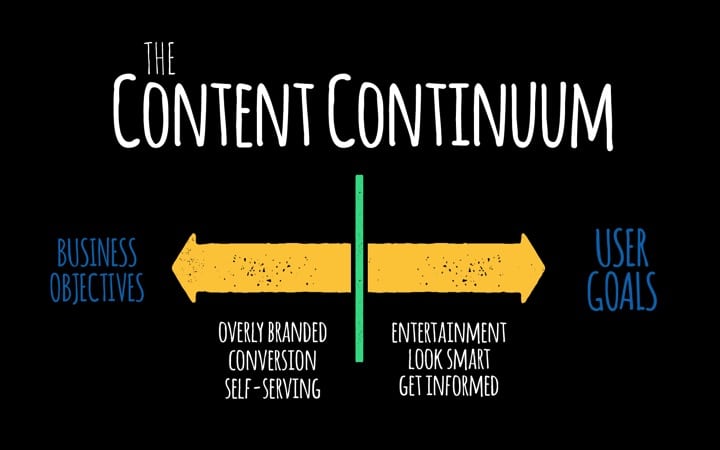 In case you were putting off building your skills as a visual communicator, consider this: Content
 To get the views and social shares, though, your content has to be on the right side of the content continuum, closer to user goals and further away from your own business objectives, according to Becca Colbaugh, senior director, digital content, for agency Saxum. But thinking about the quality and usefulness of visual content is just the second step in the process. The first is selling yourself and your senior leaders on the power of visuals.
Colbaugh, who'll be leading PR News' Visual Storytelling Workshop in New York on Nov. 5, offers several reasons why communicators ought to translate their messaging to visual forms, and what those forms ought to take:
- With recent studies showing that consumers are exposed to an overwhelming 5,000 brand messages a day, visual content is an absolute PR/marketing must.
- The days of traditional advertising and messaging are long gone — it's now all about holistic storytelling. This is how brands will connect with audiences most effectively, as consumers continue to demand authentic and quality visual content.
- Technology has radically shaped the way we communicate. Beyond being constantly connected, high-resolution screens create a need for high-fidelity visual content, which must be accounted for by communications teams and agencies.
- Distribution strategy is just important as high-fidelity visual content—micro-targeting techniques are critical to ensuring your visual content gets in front of the right audiences.
- Visual content includes everything from graphic design, illustrations, GIFs, motion graphics, interactive data visualizations, snackable graphics, live event installations and more. The possibilities are endless.
Monday, 14 October 2013
How To Pitch To The Press: The 8 No-Fail Strategies
 In my day job I’m an entrepreneur, as the founder of a leading PR strategy agency, Snapp Conner PR. But I’m also a frequent speaker on communications and business topics, and as a Forbes contributor, a writer and journalist as well.
Last week I moderated a panel for the Money2020 trade show in Las Vegas. Here’s where things turned interesting. In the final month before the show, somehow my name made its way onto the list of press attendees
What an eye opener.
I received hundreds of emails. Scores of calls came to our agency. Some even found their way to my cell. Public relations people throughout the U.S. were all being paid by their employers and clients to tout their news to the press and to score commitments for appointments during the show.
First it was funny. Then it was sad. Lengthy pitches. Friendly pitches. Form pitches. Some of the same individuals pitched me again and again. All of this in spite of the fact I was in and out of Las Vegas in a matter of hours and the subjects I cover as a Forbes contributor have no applicability to the things the majority of these poor souls were promoting.
If I were to estimate the salaries and billable hours of the fervent pitches to me alone the cost would amount to tens of thousands of dollars. Multiplied by the hundreds of other reporters who attended this show, the sum exhibitors paid to ply the press likely amounted to a million dollars or more, largely wasted.
Do you know how many pitches I responded to? One. It was one of the shortest pitches of the hundreds I received, but it got straight to the point. The PR person addressed me by name (and even spelled it correctly!) Far more importantly, she had tied the idea she was presenting into not one but two of the articles I’d recently written to suggest how the spokesperson and topic would tie into a great future story for me that would build in a meaningful way upon the things I’d already done.
She quickly highlighted the high points of the company’s recent achievements and news. And she suggested a reasonable and convenient way we could follow up together. No pushiness. No form letter. No guile. But it was clear she had done her homework to provide a useful idea that was intended entirely for me.
I wrote back that she had won the jackpot. Out of sheer respect for the time she had taken (probably 20-30 minutes or less) to create a pitch I could actually use, I would find a way to do the interview and create a story. (She responded back that she was so excited she was strongly considering tattooing my message onto her wrist, a la Angelina Jolie.)
What makes the difference between an effective pitch to the press and the hundreds and thousands that find their way into the trash? I am especially interested in this topic since my team is a PR agency ourselves. I also note the words of entrepreneurs like Contributor Jason Nazar, who noted in one of his recent columns that he had originally outsourced his company’s work in social media and PR, with bad outcome, and as a result had taken it back on by himself. And as far as I can tell, he’s met with outstanding success.
Can you pitch the press successfully? Does it always require an agent or an agency? What are the secrets successful entrepreneurs (and successful PR people) know? Pitching the press may be easier than you think. Here are a few golden rules:
- Choose a target. And make sure the target will actually fit. For example, thousands of companies through the years have attempted to pitch Walt Mossberg on writing about products such as network traffic management tools. Yet he specializes in covering products consumers would use. A good fit? Not at all.
- Read the writer’s prior articles. Thoroughly. Read them with an eye for their interests, their themes, and the way your idea would help extend their subject matter further. (Not “I see you wrote about XX, so how about you write about it again?”) When you make your pitch, let the writer know how and where your idea might fit. Think through the idea through the reporter’s eyes—how will this piece be of interest and need to the reader? How will it meet the criteria the publication and the writer’s section and assignments must meet?
- Pitch a story—don’t pitch your company. Believe it or not, your company and product, by themselves, are not an interesting topic. But as part of a broader story or an example of a pervasive need or a message—now they can shine. Think of what that story might be and imagine what it might look like in the hands of the reporter you’ve chosen. From that point of view, prepare your pitch. Make your pitch by email first. Let it gel for at least an afternoon, or preferably for a day. If the idea is a good one, the reporter may respond right away. If you don’t hear back, perhaps the next step is a call. When you call, refer to the earlier message. Regardless of whether the reporter has seen it or not, re-forward as a courtesy as you are talking to allow the individual to scan the high points of the message and preliminarily respond.
- Be respectful of the reporter’s right to make the decision. As tempting as it is to ply the reporter with a strong armed pitch, you will be more successful by respecting the reporter’s right to say yes or no, while providing them with as many meaningful reasons as possible to have the desire to say yes. Is the story an exclusive? An idea or a slant that hasn’t been offered to anybody else? Will it be of broad need and interest to the reporter’s readers or viewers, and does it give them strong news or an angle on the information that hasn’t been presented before? All of these ideas will help.
- When you speak to the reporter, get straight to the point. The whole idea of buttering a reporter up to the topic you called for is a bad one. Clearly you phoned because you wanted something. With the first words out of your mouth, let them know what it is, and what your reasons are for thinking it’s a good idea. If it’s yes, follow through quickly with the next steps. If not, why not? For another person or with another approach could it be a better idea? With the business of the call handled, you can then visit with the reporter for a bit and catch up if they have the time and the willingness. And at that point, they’ll know the personal interest is sincere.
- Be honest and transparent about your desire for the interview or the meeting. For example, I was extremely annoyed to get an urgent message from a vendor needing my next available time to discuss their public relations only to find out their one and only reason for the appointment was to give me a demonstration of a product they were hoping I would cover for Forbes. And it was a product that didn’t fit my area of coverage, at that. The executives wasted an hour and a half of their time and mine. Not only will they not see coverage, but the company they represent will now find it highly difficult to get a return appointment with me when they genuinely do want to meet to discuss their PR.
- If you can’t reach the reporter, avoid the temptation to call repeatedly. Listen to the reporter’s voice mail—it will often provide you with clues. For example, the reporter may be on vacation this week—out sick—moved to another beat (or even another publication) or may be so adamantly opposed to voice messages that you should be aware the message will likely never be heard (or may even offend them). If you do leave a message, one message in a day is ample. If the reporter has left a cell number on the message, refrain from using it unless the matter is genuinely urgent. They’ll appreciate the courtesy you use in reaching out in the ways they most like to be contacted.
- Consider the strengths of Twitter. Twitter can often be a clue as to where the reporter is and what they are doing on that day. For example, if they Tweet they just arrived at the Oracle ORCL +0.82% World trade show, it’s no wonder they didn’t answer the office phone. Now you know. Time your next call for after the event. Also, many reporters will respond to direct messages through Twitter faster than any other mechanism. Use that advantage, when you can take it, with skill.
So the next time you feel the urge to send a mass PR pitch or to hire an agency to do so, save your money and save your breath. If you follow these principles effectively you may even be able to accomplish some or all of your great public relations yourself. Then, when you have that great pitch and idea prepared, feel free to send me a message or give me a call. I’ll be waiting.
Sunday, 29 September 2013
Why Agencies and Brands Need to Embrace True Storytelling
 To build on the opportunities that today’s hyperconnected and social consumer as well as new distribution platforms offer, agencies and brands need to move away from thinking about branded content and embrace true storytelling.
The difference? Stories rely on the intended audience to develop their own imagery and detail to complete and, most importantly, to co-create, whereas content does not. Content is primarily created in the internal mind of the content originator, with no heed to the mind or to the context of the audience.
The truly great storytellers have long embraced the fact that the most powerful stories happen in the mind of the audience, making each and every story unique and personal for the individual. They also understand that stories are important because they are inherent to the human experience. Stories are how we pass on our accumulated wisdom, beliefs and values. They are the process through which we describe and explain the world around us, and our role and purpose in it. Audiences have always known this and asked for stories—they’ve never asked for content.
As the German literary scholar Wolfgang Iser noted: “No tale can ever be told in its entirety.” His reader-response theory “recognizes the reader as an active agent who imparts ‘real existence’ to the work and completes its meaning through interpretation.”
It is this acceptance of the concept that we cannot—nor should we try to—tell any story in its entirety, and the subsequent embrace of the mind of the audience in co-creating our story that is the vital step we need to make if we are to truly resonate emotionally with our audience.
But why does it really matter?
There is little hesitation in knowing we operate in a cultural and technological world where consumers know everything about a brand, from who owns it to where and how products are manufactured and sold. As a result of this, companies are now evaluated by much more than their products. We are in a world where a brand’s values and the emotions they evoke are narrative material.
This presents marketers with an amazing opportunity, as the most powerful way to persuade someone of your idea is by uniting the idea with an emotion. It’s indisputable that the best way to do that is by telling a compelling story.
But we need to recognize that it demands insight and skill to present an idea that packs enough emotional power.
A couple of examples—one old and one new—of great storytelling. The legendary Steve Frankfurt, who is credited with creating the tagline “In space no one can hear you scream” for the 1979 movie Alien, clearly understood the role of co-creation in telling stories. This line created a world for the imagination to populate. It allowed the audience to put themselves in the story and co-create its own sense of claustrophobia, fear and isolation. It was simple and comprehensible yet gave clear direction and meaning. It perfectly captured the idea of the brand (or in this case, movie), teasing us as to what the film would deliver and at the same time aligning perfectly with the experience of it. It was a story in its own right.
More recently was Intel’s The Beauty Inside, a “social movie” that centered on a guy named Alex who wakes up every day with a new face and body. While there were many reasons to applaud this work, it was the central notion itself that drove its success. As director Drake Doremus says, “The story was exciting to me. The idea of waking up in somebody else’s skin every day but being the same person on the inside … was some territory I was interested in exploring.” This is equally true of the audience.
When we start to program a brand, we need to understand its full narrative and which parts of the story we need to create, which to co-create with the audience and which to leave to allow the audience to impart and complete their own meaning.
Despite the great work mentioned here, I don’t believe this subtle yet vital shift is one that the majority of people in our business clearly understand. How we embrace this difference between content and stories and then bring true storytellers into our world will be the key to the future success of our industry.
Content is dead. Long live storytelling.
Thursday, 12 September 2013
PR Insider: 7 SEO Basics Every PR Pro Should Know
Content marketing is now a $44 billion industry. And with businesses planning to increase their budgets toward search engine optimization (SEO) by up to 44% this year, PR professionals must be savvy in digital communications tactics in order to remain in the game.
At a minimum, every PR pro should know the following seven SEO basics:
1) Build strong links. When another website links to your own site, Google awards you with “SEO points” for being a place that someone else found interesting, helpful or relevant. The more popular the site that links to you, the better.
So how can you aim to get more link-backs? Look at what you’re probably already doing a lot of: Pitching the media and blogging. News outlets naturally draw high traffic online. If you secure an opportunity for a client in, say, The New York Times, make sure that client’s name is hyperlinked in the story. Help your client launch and maintain a keyword-rich blog, and pitch them as guest contributors for high-traffic sites.
2) Understand meta text. The titles, descriptions and keywords written into each page of a client’s website hugely impact that site’s organic SEO strength. Titles are by far the most important piece of meta text, followed by descriptions. Search engine results often display only the first 150 characters of description text, so help your clients draft succinct, keyword-rich information to describe themselves within the space that Google allows.
3) Avoid common mistakes when measuring search rank. PR is all about measuring the before-and-after of a campaign. As an SEO consultant, record where your clients rank in their respective industries before you start a project, and continue to monitor how they climb in search results for those same keywords as your recommendations are implemented.
One of the most common mistakes people make can be avoided with a few clicks. When searching terms to determine where your client ranks, make sure you’re logged out of your Google account. If you use Gmail for work and must be logged in, search under Google’s “Hide private results” option, which has the graphic of a globe (see below). By default, your setting is on “Private results” (the graphic of a person), which takes into account your personal search history. Assuming you visit your clients’ websites quite often, “Private results” will cloud those sites’ true rankings, giving you biased data.
 4) Know what works—and what doesn’t—on social media. Social signals are increasingly important to ranking. But don’t expect social media to work miracles on its own; creating a Facebook page or Twitter handle won’t really affect SEO unless quality content is being shared on those platforms. Likes, retweets, shares, comments and +1s all send Google cues that your content is relevant, and thus should be ranked higher.
5) Use photos to tell your story. Web users love images. It’s no surprise that visual tools like Pinterest, Instagram, Vine and Tumblr have taken off in recent years. In fact, Pinterest now drives more traffic than Google+, YouTube and LinkedIn combined, and last year the site beat out Twitter in referral traffic.
In addition to scanning the text written into websites and press releases, search engines also index images. Make sure the alt tags used to title your clients’ image files (usually .jpg or .png) include the same keywords—both brand name and industry term—that you’d write into a press release or blog entry.
6) Keep the Google bots happy. It’s tempting to include every keyword you (or your client) would ever want to rank for, but Google will punish you for it. “Keyword stuffing”—the overuse or repetition of keywords and phrases—can cause Google to flag your site as spam, resulting in a lower search ranking that’s harder to escape.
To avoid being the PR pro who placed your client on Google’s blacklist, do what you do best: Write like a human, not an SEO machine. Don’t force keywords if they don’t fit naturally in the text. And present information online the way search engines like to read it—broken down by topic into multiple pages. Google bots are professional organizers, so a site formatted like a well-kept filing cabinet is one they’ll award with stronger SEO
7) Let search engines spill their secrets. There are two ways to easily find the top-searched keywords in your client’s industry: Google’s Keyword Planner and Google’s guessing feature, which you’ll see every time you type terms into the search bar. Use these tools to create a “keyword bible” that you reference while copywriting, making sure to incorporate popular terms in PR and social media materials. Using the guessing feature, find the questions your client’s prospects are asking online and look for media opportunities to answer those questions.
At a minimum, every PR pro should know the following seven SEO basics:
1) Build strong links. When another website links to your own site, Google awards you with “SEO points” for being a place that someone else found interesting, helpful or relevant. The more popular the site that links to you, the better.
So how can you aim to get more link-backs? Look at what you’re probably already doing a lot of: Pitching the media and blogging. News outlets naturally draw high traffic online. If you secure an opportunity for a client in, say, The New York Times, make sure that client’s name is hyperlinked in the story. Help your client launch and maintain a keyword-rich blog, and pitch them as guest contributors for high-traffic sites.
2) Understand meta text. The titles, descriptions and keywords written into each page of a client’s website hugely impact that site’s organic SEO strength. Titles are by far the most important piece of meta text, followed by descriptions. Search engine results often display only the first 150 characters of description text, so help your clients draft succinct, keyword-rich information to describe themselves within the space that Google allows.
3) Avoid common mistakes when measuring search rank. PR is all about measuring the before-and-after of a campaign. As an SEO consultant, record where your clients rank in their respective industries before you start a project, and continue to monitor how they climb in search results for those same keywords as your recommendations are implemented.
One of the most common mistakes people make can be avoided with a few clicks. When searching terms to determine where your client ranks, make sure you’re logged out of your Google account. If you use Gmail for work and must be logged in, search under Google’s “Hide private results” option, which has the graphic of a globe (see below). By default, your setting is on “Private results” (the graphic of a person), which takes into account your personal search history. Assuming you visit your clients’ websites quite often, “Private results” will cloud those sites’ true rankings, giving you biased data.

Google’s “Hide/Show Private Results” button
5) Use photos to tell your story. Web users love images. It’s no surprise that visual tools like Pinterest, Instagram, Vine and Tumblr have taken off in recent years. In fact, Pinterest now drives more traffic than Google+, YouTube and LinkedIn combined, and last year the site beat out Twitter in referral traffic.
In addition to scanning the text written into websites and press releases, search engines also index images. Make sure the alt tags used to title your clients’ image files (usually .jpg or .png) include the same keywords—both brand name and industry term—that you’d write into a press release or blog entry.
6) Keep the Google bots happy. It’s tempting to include every keyword you (or your client) would ever want to rank for, but Google will punish you for it. “Keyword stuffing”—the overuse or repetition of keywords and phrases—can cause Google to flag your site as spam, resulting in a lower search ranking that’s harder to escape.
To avoid being the PR pro who placed your client on Google’s blacklist, do what you do best: Write like a human, not an SEO machine. Don’t force keywords if they don’t fit naturally in the text. And present information online the way search engines like to read it—broken down by topic into multiple pages. Google bots are professional organizers, so a site formatted like a well-kept filing cabinet is one they’ll award with stronger SEO
7) Let search engines spill their secrets. There are two ways to easily find the top-searched keywords in your client’s industry: Google’s Keyword Planner and Google’s guessing feature, which you’ll see every time you type terms into the search bar. Use these tools to create a “keyword bible” that you reference while copywriting, making sure to incorporate popular terms in PR and social media materials. Using the guessing feature, find the questions your client’s prospects are asking online and look for media opportunities to answer those questions.
Tuesday, 27 August 2013
New-school ways to grab attention with your press releases

There’s been a lot of recent attention paid to press releases and the links within them, which are the subject of new guidance from search giant Google. Fact is, most PR pros will see little if any impact on the results their news releases garner.
The content and structure of press releases have a far greater influence on the visibility of the message, and as competition for attention increases, the formula for a successful press release is changing.
Here are some ways to freshen the news releases your organization publishes, and get more results for your campaigns:
Make social interaction a priority.
• Serve your audience first. Frame the brand message in the context the audience craves.Rethink links. Use them strategically to provide more information for journalists and potential customers.
• Content must do more than inform. It has to be interesting and useful to your audience members if they’re going to share and amplify your message.
• Link the names of people quoted in the press release to their bios or related blog posts they’ve authored.Format the press release to maximize sharing.
• Embed a call to action for potential customers toward the top of the press release. Real-world example: PR Newswire client Jive Software reported a 200 percent increase in website traffic to a specific page when they moved a call to action for readers toward the top of the press release, embedding it right after the lead paragraph.
• Encourage on-the-spot social sharing. Highlight the key message or best piece of advice in your press release, and then embed a Click-to-Tweet link within.
• Write a tweetable headline of 100 characters or fewer. (Use a deck head to add detail.)Develop a visual communications habit.
• Employ bullet points to highlight key points and draw readers’ eyes deeper into the copy.
• Including visuals can increase visibility. (Social networks and search engines both give visual content preference.)Incorporate storytelling into press releases to make the messages more memorable and interesting.
• Visuals extend the reach of your messages into channels like Pinterest, which requires a visual element and other visual-centric social networks.
• Include a quote from someone other than an executive. Quote a happy customer, a customer service person noting how a new product has reduced support calls, or a member of the team that designed the product.More press release tips and case studies are available in a new e-book from PR Newswire, titled New School Press Release Tactics. It’s available for free download here.
• Break the formula for the press release, and dive into the value propositions, case studies, and benefits that your audience really wants to know about.
Friday, 23 August 2013
How to avoid beginning sentences with 'and' or 'but'
There's a writing trend that drives me crazy.
AND I'm not going to tell you what it is.
BUT I'm betting you can guess.
AND I won't have to go on much longer with this maddening affectation reminiscent of a kindergarten show-and-tell presentation.
AND I'm running out of ways to perpetuate this motif anyway.
BUT I won't let that stop me.
As I've previously written, there's a huge distinction between adopting a conversational tone and engaging in sloppy writing. The idea of "writing like you talk" was originally intended to wean corporate communicators (and others) off stilted, pedantic prose and jargon-laden gobbledygook.
Alas, we have ended up with a pandemic of people writing like a 5-year-old talks:
The occasional sentence-starting conjunction is fine. I don't believe in absolutes; I do believe in moderation, and in "breaking rules" for a reason. But it must be done judiciously, for optimum effect.
If a writer dips into the conjunction well too often, it simply becomes a tic.
With that in mind, let's look at five alternatives to beginning sentences—and, heaven forbid, paragraphs—with "and" or "but":
Compound sentence
Fearing the dreaded run-on sentence—especially in the online, short-attention-span sphere—writers frequently opt for a period where a comma will do nicely.
Granted, this almost requires one to move the modifying phrase, but that's a plus: It's now closer to the verb it modifies.
Semicolon
This handy little punctuation mark works best with two concise, related thoughts.
Dependent clauses and segue phrases
If you have a transitional phrase in place, there's no need for a transitional conjunction.
Taking it a step further, you could condense the phrase into a word or two.
True, but she'll never match Craig's collection of troll dolls.
Simply eliminating the conjunction
The usual purpose of using "and" and "but" between clauses is to bolster or negate (respectively) the previous contention. If that support or contradiction is strong enough, there's no need for a conjunction.
To show contrast:
The final "though" helps punctuate the contrasting pair of statements.
Substitute words
Finally, words like also, however, moreover, and the like are effective but can seem a little stuffy, so use them sparingly.
One last thing, please: If you do use "and" or "but" to start a sentence, omit the comma immediately after the conjunction in question. That goes for "or," too.
AND I'm not going to tell you what it is.
BUT I'm betting you can guess.
AND I won't have to go on much longer with this maddening affectation reminiscent of a kindergarten show-and-tell presentation.
AND I'm running out of ways to perpetuate this motif anyway.
BUT I won't let that stop me.
As I've previously written, there's a huge distinction between adopting a conversational tone and engaging in sloppy writing. The idea of "writing like you talk" was originally intended to wean corporate communicators (and others) off stilted, pedantic prose and jargon-laden gobbledygook.
Alas, we have ended up with a pandemic of people writing like a 5-year-old talks:
We went to a dairy farm. Aaaaaaand we saw cows. Aaaaaaand they milked one of the cows. Aaaaaaaand we saw an old-fashioned butter churn. Aaaaaaaand…
The occasional sentence-starting conjunction is fine. I don't believe in absolutes; I do believe in moderation, and in "breaking rules" for a reason. But it must be done judiciously, for optimum effect.
If a writer dips into the conjunction well too often, it simply becomes a tic.
With that in mind, let's look at five alternatives to beginning sentences—and, heaven forbid, paragraphs—with "and" or "but":
Compound sentence
Fearing the dreaded run-on sentence—especially in the online, short-attention-span sphere—writers frequently opt for a period where a comma will do nicely.
Instead of: No job is perfect. But too often, young PR professionals complain without offering solutions.
Try: No job is perfect, but young PR professionals too often complain without offering solutions.
Granted, this almost requires one to move the modifying phrase, but that's a plus: It's now closer to the verb it modifies.
Semicolon
This handy little punctuation mark works best with two concise, related thoughts.
Instead of: I have eclectic taste in food. And escargots are my favorite breakfast.
Try: I have eclectic taste in food; escargots are my favorite breakfast.
Dependent clauses and segue phrases
If you have a transitional phrase in place, there's no need for a transitional conjunction.
Instead of: And despite her professional demeanor, Nancy does have more tchotchkes in her cubicle than anyone else in the company.
Try: Despite her professional demeanor, Nancy does have more tchotchkes in her cubicle than anyone else in the company.
Taking it a step further, you could condense the phrase into a word or two.
Instead of: And despite her professional demeanor, Nancy does have more tchotchkes in her cubicle than anyone else in the company.
Try: Professionalism aside, Nancy does have more tchotchkes in her cubicle than anyone else in the company.
True, but she'll never match Craig's collection of troll dolls.
[RELATED: Ragan's new distance-learning site houses the most comprehensive video training library for corporate communicators.]
Simply eliminating the conjunction
The usual purpose of using "and" and "but" between clauses is to bolster or negate (respectively) the previous contention. If that support or contradiction is strong enough, there's no need for a conjunction.
Instead of: Cooking shows are popular at our house. And we set the DVR to catch every episode of "Chopped."
Try: Cooking shows are popular at our house. We set the DVR to catch every episode of "Chopped."
To show contrast:
Instead of: Cooking shows are popular at our house. But we make sure to watch the evening news.
Try: Cooking shows are popular at our house. We make sure to watch the evening news, though.
The final "though" helps punctuate the contrasting pair of statements.
Substitute words
Finally, words like also, however, moreover, and the like are effective but can seem a little stuffy, so use them sparingly.
Instead of: Great-aunt Vera enjoys macramé. And one time her neighbor said macramé was stupid, so she decked him.
Try: Great-aunt Vera enjoys macramé. Moreover, one time her neighbor said macramé was stupid, so she decked him.
One last thing, please: If you do use "and" or "but" to start a sentence, omit the comma immediately after the conjunction in question. That goes for "or," too.
Wrong: And, I mean it.Rob Reinalda is executive editor at Ragan Communications.
Right: And I mean it.
Monday, 19 August 2013
Infographic: Evolution of the PR industry
What about PR has changed since you started your career? From news clips to news
links and newspapers to online readers, this graphic highlights the industry's
major transformations
Ask any Baby Boomer and he or she will be quick to tell you just how much the PR industry has changed in recent years.
PR pros used to strive to land segments on the evening news, and now they
work to get their brands to trend on Twitter. They've swapped news clips for
news links and focus groups for Facebook fans.
There's no denying times have changed, and most of that change stems from
evolving technology. An infographic from Inkhouse.com highlights the many ways the
industry has grown.
For example, PR pros don't just pitch reporters. They've added bloggers to
their media lists, as well. And rather than put together press kits to tell a
brand's story, PR pros now turn to content marketing.
But no matter how much technology alters the way we communicate, the
principles of PR will always stay the same. Relationships, credibility,
preparedness and other industry tenets will never change.
Check out the full graphic to see how the industry has evolved:
Ask any Baby Boomer and he or she will be quick to tell you just how much the PR industry has changed in recent years.
[RELATED: Hear how top companies adapted to the digital PR industry changes at this August event.]

Monday, 5 August 2013
How PR and SEO can work hand in hand

For many years, the worlds of public relations and search engine optimization (SEO) have existed on different “islands,” providing mutually exclusive benefits.
Through Google’s Penguin and Panda algorithmic updates—two changes that have boosted the importance of editorial quality and referral sites, and have nixed the spammier forms of SEO—public relations and SEO have emerged as similar practices.
Today PR and SEO have nearly identical goals: to obtain earned media. Both PR and SEO need a backbone of relevant, informative, and newsworthy content.
SEO is evolving into a PR and content-oriented practice. Those islands are converging with shared tasks, vision, and goals. Whether you are a PR pro looking to augment your digital practice or an SEO expert looking for time-tested relationship-building and media relations skills, here are ways you can integrate the two practices to create a maximum boost for your business:
Domain juice
Guest posts or blogs are a key component of most enterprise’s public relations plans, as they do a lot to establish expertise. When you write a bylined guest article for an online publication, be sure to work with an SEO expert to make sure the links and anchor text included in the article work to your business’s advantage.
An example: At iAcquire (the digital marketing agency where I work), I recently joined forces with the director of business solutions, who is responsible for the strategy behind our clients’ SEO and reputation management. The original copy in my byline article included branded keywords and linked to our home page.
After a keyword analysis, my colleague was able to tell me that there was far greater value in linking to a sub-page within our site on our offerings using the keyword “X”. The more relevant the link, the better, so leverage internal relationships with an SEO team to boost your overall efficacy.
Influencer outreach
SEO and PR should partner in influencer outreach efforts to boost a brand’s online reputation.
Recent Google updates lend a stronger share of the pie to social signals, so establishing relationships with key influencers on those social networks has both SEO and PR value. Work together to define, evaluate, and reach out to social influencers. Realize that this partnership can secure future media relationships and boost social signals for your business.
Shared media lists
PR pros have media lists. SEO experts have lists of external website and blog targets. SEO professionals might take a more complex look at an external site’s page rank, unique visitors, or Alexa rank, while a PR pro’s list is more likely to have information on the outlet’s editorial angle, beat, and individual reporters. Combine your lists and work together on an outreach strategy. SEO pros can learn a lot about the basics of relationship building; PR professionals can learn about site analytics.
Press release 2.0
Press releases are ancient. Optimized press releases aren’t.
Simply put, releases that are optimized to include multimedia assets and link to social channels are very effective. Use SEO tactics to find popular keywords, inject them into your press release, and then see the search engine traffic flood your brand’s website. Work with a digital marketing team to create unique assets such as video interviews to give the content of your release that extra boost of interactivity.
Content
Whether you are in SEO or PR, the underlying necessity to create high-quality content remains the same. Create a shared editorial guideline document that has some of these basic pillars:
1. Gives a unique angle to a told story;Also, strong on-page content, that is, the actual text on the static pages of your website, such as an “about” page, is important for all departments within a business. Around 15 percent of the Google algorithm focuses on on-page content: its relevance, usefulness, social sharability, and metadata. Therefore, it should be a joint concern for SEO and PR. Webpage copy needs to be search-engine friendly, informative, and unique to rank highly and gain attention.
2. Shares new information;
3. Has a backbone of a strong intro, body, and conclusion;
4. Is not thin content (i.e., doesn’t simply identify a problem without really giving any solutions);
5. Is newsworthy: creates a stir, is tied to a current event, and doesn’t cover stale news;
6. Is backed up by research;
7. Offers a solution;
8. Has a clear audience in mind;
9. Demonstrates why the topic is important and whom it affects;
10. Passes the “So what?” test.
Combining editorial calendars
Stay consistent. Create a combined editorial calendar for internal content, social updates, and external targets. Disjointed messaging can create confusion in the way consumers view your brand.
Link reclamation
As a PR professional, you likely have a long list of media placements you’ve obtained. When was the last time you shared that list with your SEO team? You may be wondering why you would hash up placements from the past, but it actually can serve as a pretty effective form of link building for SEO pros.
Give the list of old placements to your SEO team and have them contact the outlets, especially if they didn’t link back to your site. This can diversify and grow the overall number of links you have pointing back to your organization’s domain.
[RELATED: Register for our PR Measurement Summit by Aug. 1 to get the early bird discount.]PR stunts and events
Over-the-top media stunts, events, launches, and meet-ups can attract great coverage and more links for your business. SEO and PR pros can work together to spread the word about events through social influencer outreach, submitting events to community local listings, and generating hype prior to the event. Invite journalists, webmasters, bloggers, and brand advocates to the event, and they will cover the event.
Subscribe to:
Posts (Atom)